STUDY REVIEW / THE ANSWER
Is TB-500 or thymosin beta-4 proven for an injury?
No. The vial sold online holds a small protein part, and doctors haven't tested that part in people.
What TB-500 is and isn't
What is TB-500? If you're looking at a vial, it's a small protein fragment made in a lab. Proteins are chains of tiny parts, much like beads on a string. This fragment copies links 17 through 23 from thymosin beta-4, a natural protein made after injury [1].
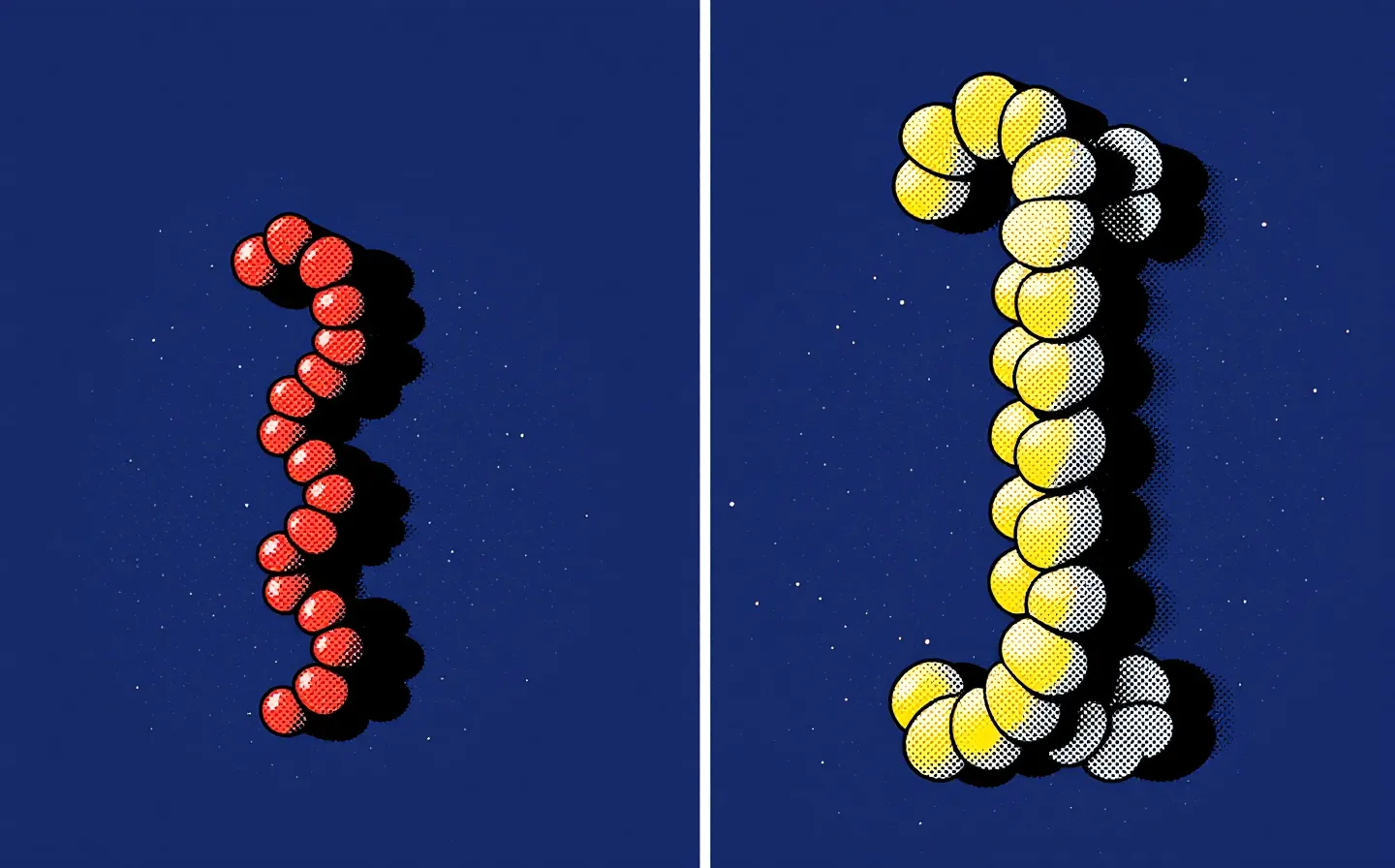
The sold fragment and full thymosin beta-4 aren't the same. You need that fact before weighing any seller's claim. TB-500 weighs 889 daltons, while the full protein weighs 4963 daltons and has far more working parts. Most healing studies used the full form in rats or mice.
Here's the catch. Those thymosin beta-4 studies didn't test what you're being offered online. Trials in people have never proved that TB-500 works like the full protein. An ad can blur the two, so you may see weak proof made to look strong.
TB-500 isn't an approved medicine. Your doctor can't use it as an approved treatment, and sports rules forbid its use. Our cell repair guide covers the protein's grip, our brain recovery review covers animal tests, and the TB-500 legal rules plus study references let you check the rest.
What TB-500 may change in damaged tissue
What may TB-500 change in damaged tissue? In cells grown in a lab dish, the short fragment grips actin. Actin helps a cell stay firm and travel. Each protein part attaches to one actin unit, making an exact 1:1 pair [1].
That grip may leave cell parts ready for repair work. Animal researchers, though, used the full thymosin beta-4 protein. Full thymosin beta-4 helped wounds close, let more heart muscle cells survive, and calmed swelling [3][5][2]. You can't assume the smaller fragment has all those working parts.
The vial itself brings another risk. A medical review warned that powders sold as TB-500 may be weak, dirty, or the wrong protein fragment, and you can't check those contents without paying for a costly lab test [11]. When you order an unapproved powder, you must trust what the seller put inside. That's a serious risk before the shot even reaches your skin.
What thymosin beta-4 does that TB-500 may not
What does the full thymosin beta-4 protein do after an injury? Your body has it in nearly every cell, and it weighs about 4963 daltons [5]. In 2012, a review found that the protein calmed swelling and helped cells move into wounds [5]. In 2021, another review covered thymosin beta-4 tests for eye and heart damage [14].
Those studies don't prove that TB-500 will help you. TB-500 is one small part of the full protein. Hospital work on thymosin beta-4 included RGN-259 eye drops and an early Phase 1 safety test of full lab-made thymosin beta-4 [6]. Doctors put the full protein into volunteers' veins and watched for harm.
Remember the size difference when a sales claim sounds strong. The sold fragment weighs 889 daltons, while the full protein weighs 4963 daltons and did more in animal tests. No doctor has shown that TB-500 can do those same things. Your choice rests on that missing proof.
What the safety facts mean before you decide
Is the sold protein fragment known to be safe? No trial has tested it in people. If you're weighing a shot, user stories can't predict your outcome. Our TB-500 effects and safety page shows you those reports beside the risks doctors can back up.